Pompeii Frescoes: How Painted Walls Transformed Rooms
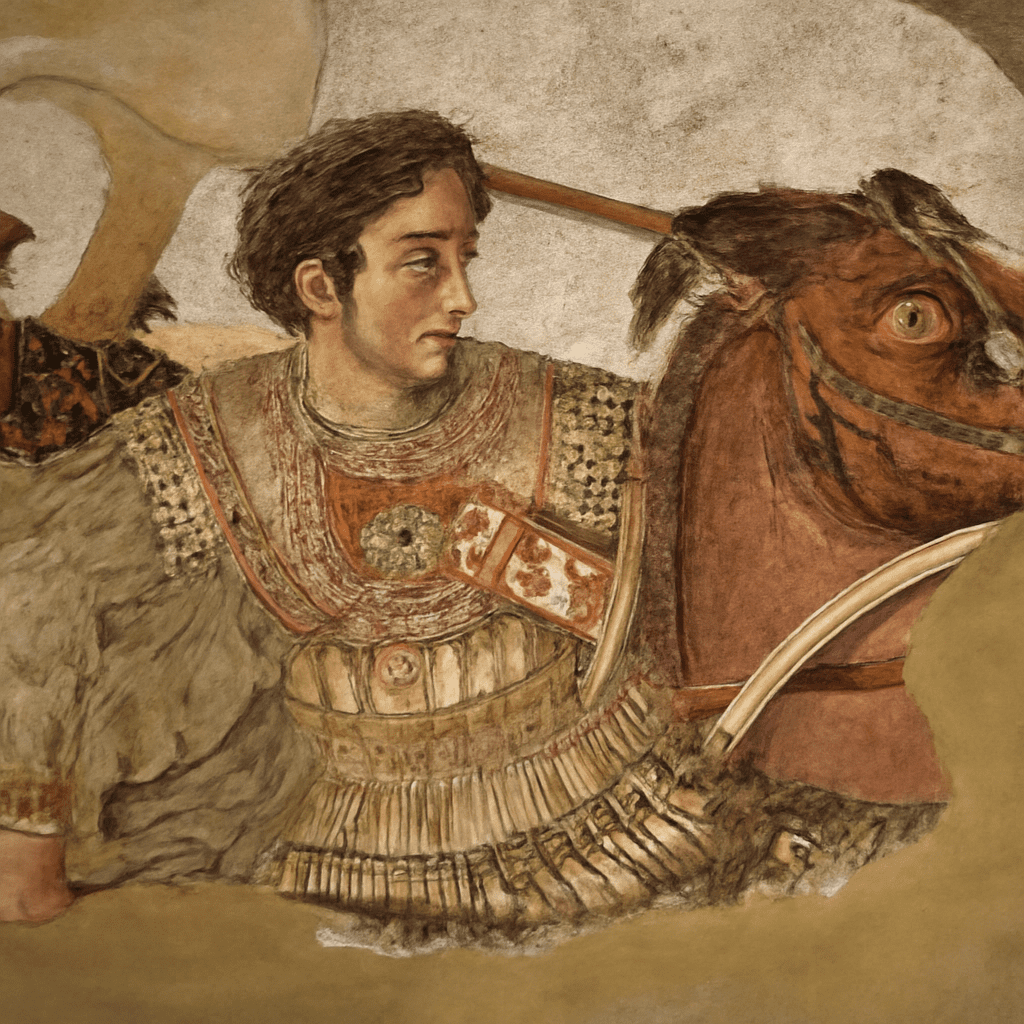
A wall in an ancient Roman house could seem to open onto a colonnade, hold a mythological scene or surround a gathering with vivid figures. The surviving wall paintings of Pompeii show how color and imagery helped shape an interior, even when the architecture itself remained solid and enclosed.
Many Pompeian frescoes survived because volcanic material buried the city after Mount Vesuvius erupted in 79 CE. The same eruption affected villas nearby. Some paintings remain in their original buildings; others were removed after excavation and are now displayed in museums, where their modern setting changes how they are encountered.
Pompeii Paintings as Part of a Room
Pompeii frescoes were not usually isolated pictures hung on blank walls. Decorative bands, architectural forms and images could work together across an entire room. A visitor might move past a painted column and encounter a figure or a small landscape framed by ornament. What looks like a single panel today was often one element in a larger scheme.
Roman wall painting had several conventions, and scholars group many surviving examples into four broad styles. These categories help describe changing choices rather than rigidly separate every workshop or building. As the Metropolitan Museum of Art explains, painters could imitate colored stone, create elaborate architectural views or arrange small scenes on strongly colored fields.
Looking at Pompeii murals begins with the room’s edges. A painted base can appear to support imaginary columns; a horizontal band can organize figures into a continuous scene. These details matter because a visitor experienced the pictures while standing, sitting and moving within an actual space, not only while looking straight at one section.
A Fresco Is Made in the Plaster
A Pompeii fresco begins with a prepared wall and layers of plaster. In the fresco technique, pigment mixed with water is applied to fresh lime plaster; as the plaster sets, the pigment becomes bound into its surface. Painters could use preliminary marks to guide the design and work in manageable sections while the plaster was still suitable for painting.
Not every visible detail was necessarily applied while the plaster was wet. The Met’s account of Roman painting techniques notes that artists also added some colors on dry plaster, a method known as a secco. A close look at surviving frescoed walls in Pompeii therefore brings together craft, material and the passage of time, as well as the image itself.
The materials also affected appearance. Dark backgrounds, red fields and lighter architectural details could make small scenes or figures stand out sharply. The color seen today has passed through centuries of burial, excavation and conservation, so a modern viewer sees a surviving surface rather than an untouched new room.
Figures Around the Villa of the Mysteries
The Villa of the Mysteries, just outside Pompeii’s ancient city walls, contains a striking room with figures set against a rich red ground. Women, mythological beings and other figures unfold across three walls, their gestures carrying the eye around the room. The archaeological park’s guide links the scene to Dionysus and dates the frieze to around 80–70 BCE.
The scene is often discussed in relation to ritual, although its full meaning remains debated. It is productive to begin with what can be seen: the figures are nearly life-size, and the red field unifies scenes that occupy different stretches of wall. Their scale gives the impression that the room is shared with an unfolding event, rather than decorated with a series of separate small pictures.
These Pompeii frescoes are particularly revealing as interior design. Fresco painting at Pompeii could make architecture and figures work together. The painted participants occupy the same enclosed space as the people who once used the room, while the bands above and below establish a visual structure. The image gains much of its force from wrapping around the architecture.
An Imaginary View From Boscoreale
A second example comes from a villa at Boscoreale, north of Pompeii, rather than from a house inside the city. The Metropolitan Museum’s reconstructed bedroom, dated about 50–40 BCE, preserves wall paintings from the Villa of P. Fannius Synistor. Painted columns and parapets frame imagined courtyards, buildings and a garden; a fountain and fruit add smaller details to the expansive scene.
The effect is different from the figures at the Villa of the Mysteries. Here the wall seems to recede, offering views beyond the room through an architecture that exists only in paint. Columns establish a foreground, while the distant buildings and vegetation create layers for the eye to explore. This architectural illusion is associated with the Second Style of Roman wall painting.
The room now stands in a New York museum. Its painted walls came from the ancient villa, but the display is a reconstruction, not the original room still standing at Boscoreale. A Met publication notes that the mosaic floor and furnishings shown in its historical reconstruction came from other Roman villas. That distinction helps viewers appreciate both the original decoration and the later choices that make it legible.
Reading a Painted Wall
Pompeii paintings reward attention at two scales. Pompeian wall frescoes gain meaning from their setting. From a distance, the major divisions determine whether a room feels enclosed by figures or opened by imaginary architecture. Up close, a painted shadow, border or small object explains how that larger effect was made. Comparing painted walls from Pompeii with the nearby Boscoreale room reveals not one formula, but a range of ways to turn plaster into an inhabited visual world.