A Painting Signature That Belongs in the Picture
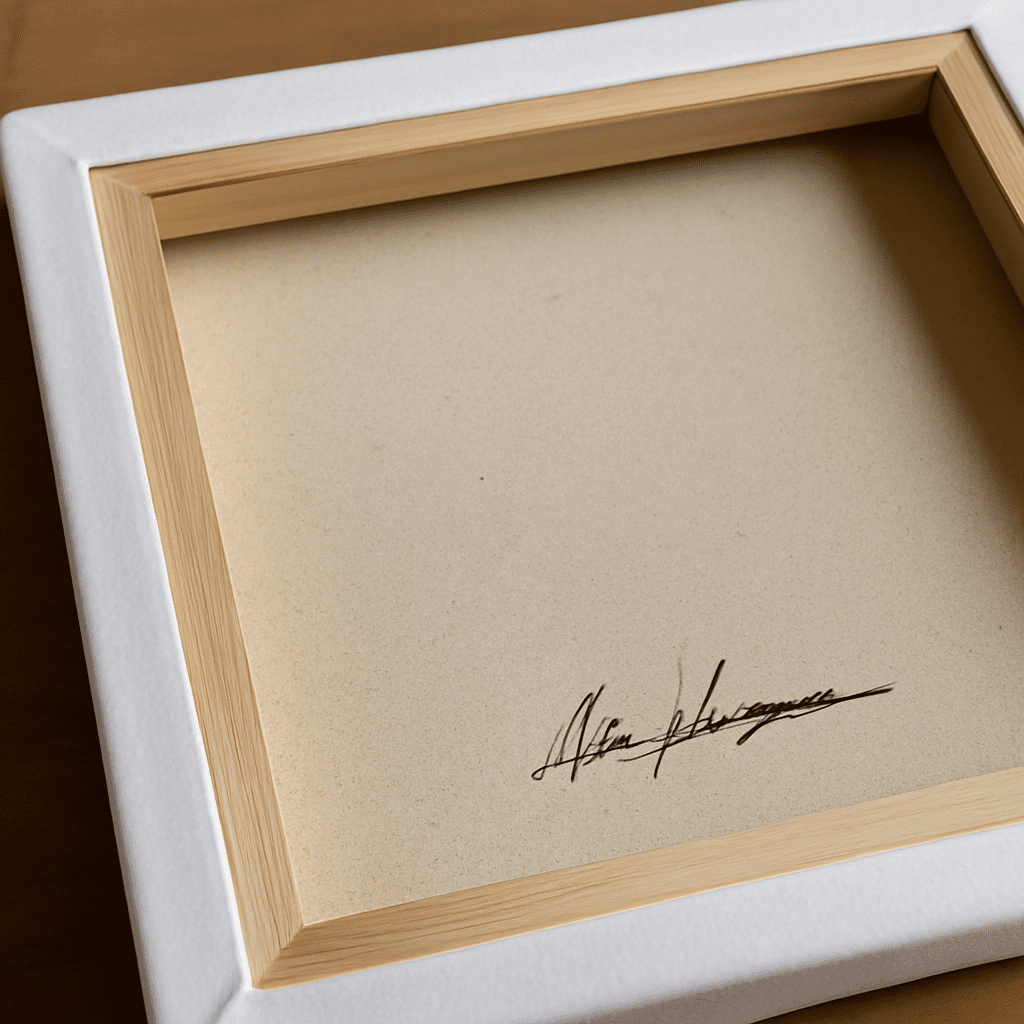
The last brushstroke is dry, the canvas is ready to frame, and one decision remains: where should the artist put a name? A signature on a painting needs to identify its maker while sitting comfortably within the image. Thinking through how a painting should be signed before the brush touches the surface gives that final mark the same care as the rest of the composition.
How to Sign a Painting Without Disturbing the Composition
When choosing where to sign a canvas, a lower corner is a familiar position because it is easy to find and often has space away from the main subject. The lower left may balance a figure on the right; the lower right may settle into a dark foreground. Neither corner is compulsory. A signature can also sit along an edge or on the back when the face of the work has no suitable opening.
Stand back from the painting and look for an area where the mark will remain visible without pulling the eye away from a face, a bright highlight, or another focal point. A painted signature placed over a busy pattern can disappear; the same name on a quiet patch may read clearly at a smaller size. Before committing, write a trial version on a scrap of transparent acetate and hold it over several positions. Keep the sheet from rubbing against a vulnerable surface.
The question of how to sign a painting also depends on the intended frame. A mat or frame lip can cover part of a mark placed too close to the edge. If the framing dimensions are known, mark the covered area on a separate sheet and use it as a guide. If they are not, allow a margin and photograph the finished work before framing.
Shape a Legible Mark
A full name, surname, initials, or an established artist name can all work. The choice should be recognizable and reasonably consistent across a body of work. An elaborate flourish may suit one image but become difficult to repeat at a smaller scale; a simpler version gives the artist more control. A date can be included alongside the name, on the reverse, or in the work’s records. Deciding how to add a signature to a painting includes choosing whether that date belongs on its face.
A painting signature should be large enough to read at close range and small enough to remain subordinate to the image. Its color can echo a nearby hue, with enough contrast to separate the letters from the background. The lettering can borrow its color from the surrounding palette. A warm brown on a pale ground may feel integrated; a thin dark line on a dark ground may disappear altogether. Testing a sample against a similar color helps reveal the difference.
Artists deciding how to sign artwork can practice the same name at several sizes on scrap material. The pressure of the hand, the spacing between letters, and the length of a final stroke all change its visual weight. For a small panel, a compact surname may work better than a long inscription; a larger canvas can accommodate a more open hand.
Match the Material to the Surface
The signing material should adhere to the painted surface and remain compatible with the layers beneath it. To sign an acrylic painting, an artist might use acrylic paint and a fine brush; for an oil painting, a small amount of oil paint is a common choice. Use a clean brush with a point that holds its shape, and test the paint’s flow on a separate surface first. Paint that is too thick can leave ridges, while a very thin mixture can spread into uneven lines.
Timing a signature on the painted surface matters. If the underlying paint is still wet, the name may blend into it or drag through it. On a dry surface, a separate mark gives greater control, though the appropriate drying interval depends on the medium and thickness of the paint. When working over a varnished surface, consult the coating and paint manufacturers’ guidance before adding anything; the behavior of a new layer depends on the materials already present.
When signing artwork, the artist can use a light touch and make the letters in a few confident strokes. A small mahlstick or a hand rested on a clean support can help steady the brush without touching the picture. If a mistake occurs, the safest correction depends on the medium and how far the layer has dried; avoid scraping or applying a solvent without knowing how it will affect the paint below.
Record the Work
Adding a name to the finished piece is only one part of keeping it identifiable. Maintain a record with the artist’s name, title, date or year, medium, support, dimensions, and a clear photograph of both the front and the reverse. Give the image file and record a matching identifier, and note any later changes in title, framing, or ownership history as they become known.
The way an artist writes a name can help connect a picture to those records, but a name alone does not establish authorship, authenticity, or ownership. Keep dated photographs and other relevant documentation with the record so that the work can be traced and described accurately.
Before deciding how to put a signature on a painting, check the proposed location against the frame, hold the test version at viewing distance, and confirm that the chosen paint flows cleanly on scrap. Then make the mark on the finished surface.