What Is the Tallest Tower in the World?
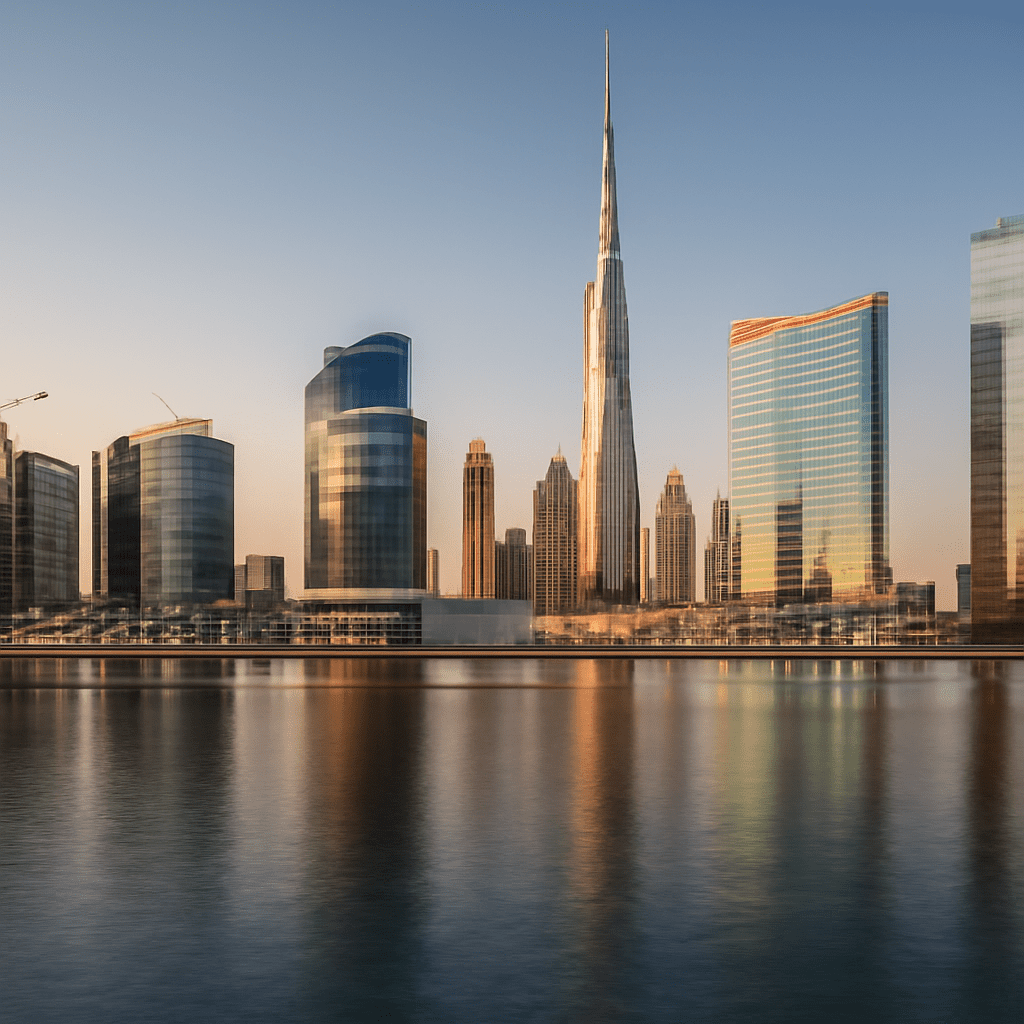
The title of “tallest tower in the world” is not just an engineering accolade. It represents the peak of human ambition and architectural innovation, symbolizing the heights that civilizations can achieve. Today, the world’s skyscrapers and broadcast towers push the boundaries of design and technology, each vying for global recognition. Here’s a detailed look at the current record holder, how it compares to other monumental man-made structures, the ongoing race to the skies, and fascinating insights into these engineering giants.
The Tallest Tower in the World Today
The tallest tower in the world is the Tokyo Skytree, located in Sumida, Tokyo, Japan. Completed in 2012, Tokyo Skytree rises to an astonishing height of 634 meters (2,080 feet), making it the tallest tower and the second tallest structure of any kind in the world. The primary purpose of the Tokyo Skytree is to serve as a television and radio broadcast site for the Kanto region, but it also doubles as a major tourist attraction featuring observation decks and a range of dining and shopping experiences.
The height of 634 meters was chosen deliberately; in Japanese, the numbers 6 (mu), 3 (sa), and 4 (shi) can be pronounced together as “Musashi,” an old name for the region where the tower stands. The Tokyo Skytree’s design blends traditional Japanese aesthetics with cutting-edge technology, incorporating earthquake-resistant features, a necessity in Japan’s seismically active environment. Its sleek, cylindrical shape tapers as it rises, culminating in a broadcast antenna that covers a wide radius.
While many associate the world’s tallest structures with skyscrapers, it’s important to distinguish between a “tower” and a “building.” A tower is generally defined as a tall, slender structure not intended for regular occupancy or residential use across its full height. The Tokyo Skytree, therefore, holds the record for the tallest tower in the world, but not the tallest building.
Visiting Tokyo Skytree offers a unique experience. The two observation decks—Tembo Deck at 350 meters and Tembo Galleria at 450 meters—provide panoramic views over Tokyo, Mount Fuji, and the surrounding region. The tower attracts millions of tourists annually, underscoring its dual role as a functional broadcast hub and a cultural landmark.
How the Tallest Tower Compares to Other Man-Made Structures
The distinction between the tallest tower in the world and the tallest man made structure is crucial. While the Tokyo Skytree claims the top spot among towers, the tallest man made structure overall is the Burj Khalifa in Dubai, United Arab Emirates. The Burj Khalifa, completed in 2010, soars to 828 meters (2,717 feet), eclipsing the Skytree by nearly 200 meters. However, the Burj Khalifa is classified as a skyscraper, designed for mixed-use occupancy with residences, offices, and hotels throughout its height.
“Towers” and “structures” can also refer to a range of other forms, such as radio masts, transmission towers, and observation towers. For instance, before the Burj Khalifa, the Warsaw Radio Mast in Poland was the tallest man made structure in the world, standing at 646.38 meters (2,120.7 feet) until its collapse in 1991. Unlike the Tokyo Skytree, the Warsaw Radio Mast was a guyed mast rather than a self-supporting tower, designed solely for longwave radio transmission.
Other famous towers include the Canton Tower in Guangzhou, China (600 meters), the CN Tower in Toronto, Canada (553.3 meters), and the Ostankino Tower in Moscow, Russia (540.1 meters). Each of these serves as a broadcast and observation platform, but none exceed the Tokyo Skytree’s height. Among man made structures, notable entries are the Abraj Al Bait Clock Tower in Mecca, Saudi Arabia (601 meters), and the Shanghai Tower in China (632 meters), both of which are skyscrapers, not towers under the strict definition.
In summary, the Tokyo Skytree leads among towers, while the Burj Khalifa claims the overall record among all man made structures, each representing different architectural categories and functions.
History of Record-Breaking Towers
The quest to build the tallest tower in the world has a rich history marked by technological advancement and symbolic ambition. The Eiffel Tower in Paris, completed in 1889, was the first structure to surpass 300 meters and held the title of the world’s tallest structure until the Chrysler Building in New York City overtook it in 1930. The Eiffel Tower, at 324 meters including its antennas, remains an enduring symbol of innovation.
Over the decades, television and radio broadcast needs prompted the construction of taller towers. In 1967, the Ostankino Tower in Moscow claimed the record at 540.1 meters, serving as both a communications hub and an observation platform. Toronto’s CN Tower, completed in 1976 at 553.3 meters, surpassed Ostankino and held the record for over three decades, becoming a celebrated icon in Canada and the global engineering community.
The 21st century has seen a rapid escalation in supertall tower construction, particularly in Asia and the Middle East, reflecting both technological progress and the economic aspirations of emerging economies. The Tokyo Skytree’s completion in 2012 established a new benchmark for broadcast towers, utilizing advanced seismic engineering to ensure safety in earthquake-prone Tokyo.
This competitive spirit continues, with designs for even taller towers being proposed around the world. Each new record-setting project is not just an engineering challenge, but a symbol of its city or nation’s place on the world stage.
Fascinating Facts About the World’s Tallest Towers
The Tokyo Skytree’s foundation reaches 50 meters underground to ensure stability, a vital consideration in a region subject to earthquakes. Its design includes a central reinforced concrete core and a flexible steel frame that can absorb seismic shocks, making it one of the safest towers for its height.
The Skytree’s 634-meter height was intentionally chosen for its cultural significance, as well as its engineering feasibility. The observation decks feature glass floors and 360-degree views, drawing over 30 million visitors in its first three years. The tower is illuminated at night with two distinct color themes, Edo Purple and Sky Blue, enhancing its status as a visual centerpiece in Tokyo’s skyline.
Other towers have their own unique features. The CN Tower in Toronto offers the EdgeWalk, where thrill-seekers can walk on the outside rim of the observation pod, secured by harnesses. The Canton Tower boasts a “bubble tram” ride at the top, giving visitors an unparalleled view of Guangzhou. Moscow’s Ostankino Tower, in addition to broadcasting, provides a rotating restaurant for guests to dine high above the city.
The tallest towers often double as scientific and communications platforms. Their height enables clear radio, television, and cellular transmission over vast distances, minimizing interference from buildings and terrain. Each new tallest tower serves not only as a landmark of architectural prowess but as a practical linchpin in modern infrastructure.