Abstract Expressionist Painting: Gesture, Color, and Scale
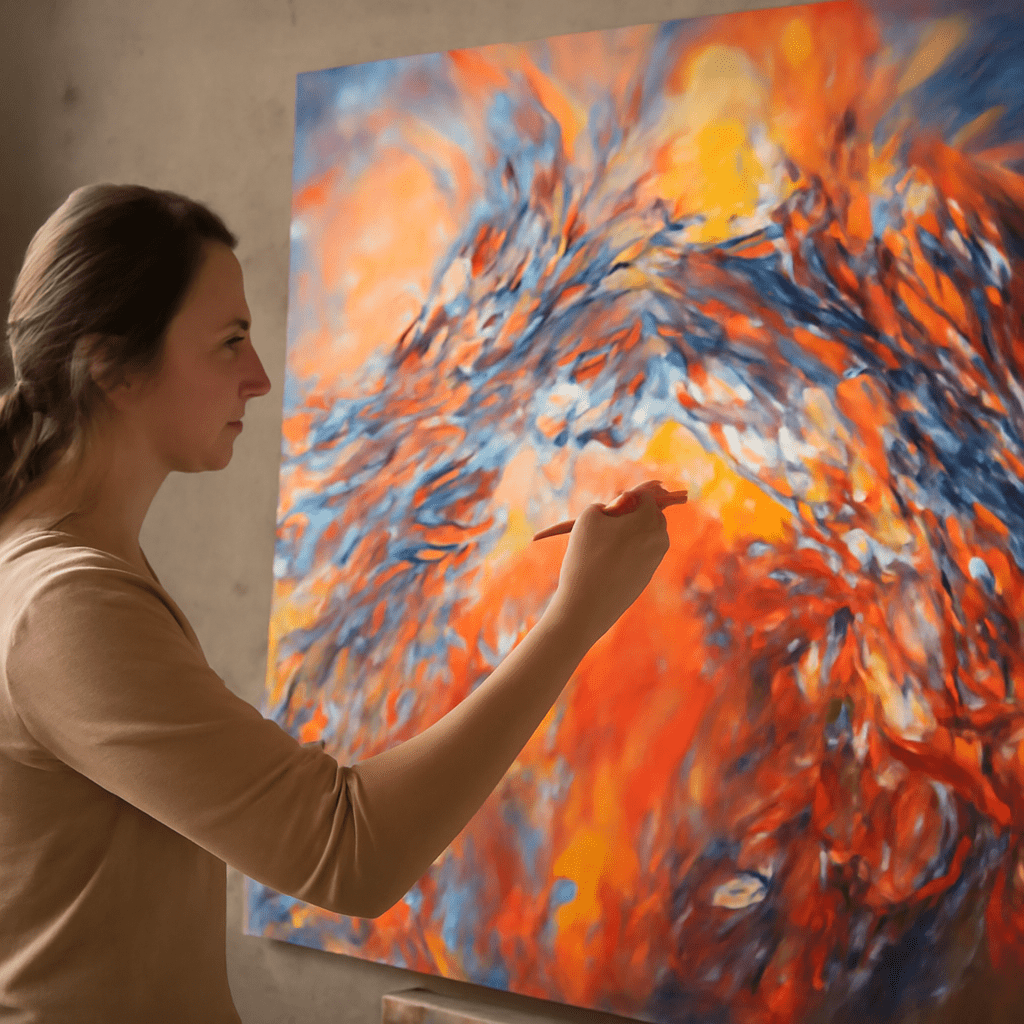
In Jackson Pollock’s One: Number 31, 1950, looping threads of paint cross a canvas more than 17 feet wide. The lines offer a visible trace of movement, yet the celebrated art of Abstract Expressionism also includes quieter expanses of color that reward a different pace of looking.
A painting associated with Abstract Expressionism may invite attention to the act of making, the atmosphere of a color field, or both. Comparing works by artists associated with the movement reveals a range of approaches rather than a single formula for abstraction.
Famous Abstract Expressionism: A postwar context
Abstract Expressionism emerged in the United States in the 1940s and 1950s, with New York an important center. Artists in its orbit responded to a world transformed by economic upheaval and war while drawing on varied sources, including European modernism and Surrealist experiments with chance. They shared an interest in painting as an ambitious means of expression, but did not work from one uniform program.
The National Gallery of Art’s teaching guide describes two broad tendencies: paintings organized primarily through gesture and those emphasizing color. These categories help a viewer begin to compare works; individual pictures can move between them. Some artists associated with the movement also used recognizable imagery, so abstraction itself was not an absolute rule.
The famous abstract expressionism of the postwar New York scene became influential far beyond its immediate circle. Its best-known canvases are only part of the story, however: different artists found different ways to make scale, touch, and color carry meaning. Looking at a particular surface makes those choices more concrete than a label alone.
Pollock: movement across the canvas
In One: Number 31, 1950, Pollock worked on canvas laid on the floor, pouring, dribbling, and flicking paint. The Museum of Modern Art identifies the materials as oil and enamel on canvas and describes dense, interlaced threads offset by pools and splashes. The paths of the lines travel across the surface rather than gathering around a single central figure.
The marks suggest the artist’s reach and changes in speed, while their overlaps create a web that can be followed from one edge to another. Some lines appear taut and dark; others pool or splinter. Seen together, they form a composition with variations in density as well as a sense of movement. Gesture here is not just a dramatic story about the painter: it is visible in the physical behavior of the paint.
Rothko: color as an encounter
Mark Rothko’s No. 10, also made in 1950, offers a useful counterpart. MoMA describes three dominant horizontal planes that merge softly into one another, with passages of warm yellow and cooler blue, white, and gray. The transitions encourage the eye to linger at the edges, where one area seems to breathe into the next.
Instead of tracing a network of lines, a viewer can consider the proportions and relationships of these broad areas. Where does the yellow seem to advance? How does a softened boundary affect the space between colors? Rothko’s large shapes can appear simple from a distance, while their layered surfaces reveal subtle variation closer up. The effect depends on the meeting of color, edge, and scale.
Pollock and Rothko are among famous abstract expressionist artists, but their works should not be treated as a complete inventory of the movement. The celebrated painters of Abstract Expressionism also include artists who used forceful brushwork, signs, and figures in combinations of their own. A category provides a starting point for comparison; the individual painting supplies the evidence.
What to look for in the gallery
Several characteristics of abstract expressionism become clearer when the two paintings are considered together. Scale shapes the encounter: a large canvas can fill the viewer’s field of vision, making shifts in distance matter. Surface offers another clue. A poured thread, a visible brush mark, and a thin layer of color each record different decisions about material and touch.
Composition matters as much as technique. In Pollock, the eye can move through an allover network; in Rothko, it can move between broad horizontal zones. Neither route needs a recognizable subject to give the viewer something to examine. The distinctive qualities of Abstract Expressionism often lie in these relationships between physical marks and the experience of looking.
An abstract expressionist canvas can be approached slowly: first notice the whole image, then inspect an edge, a change in density, or a color transition. Step back again and see how that detail affects the whole. The work of renowned Abstract Expressionism painters becomes more legible when observation moves between the surface and its overall arrangement.
Does every abstract painting belong to this movement? No. Abstraction has many histories and purposes; an artist’s period, context, and working methods help place a particular work. A visitor encountering a work from the movement can use those details to understand its relation to the postwar movement without assuming that every nonfigurative picture belongs there.