A Watercolor Landscape Built With Light and Distance
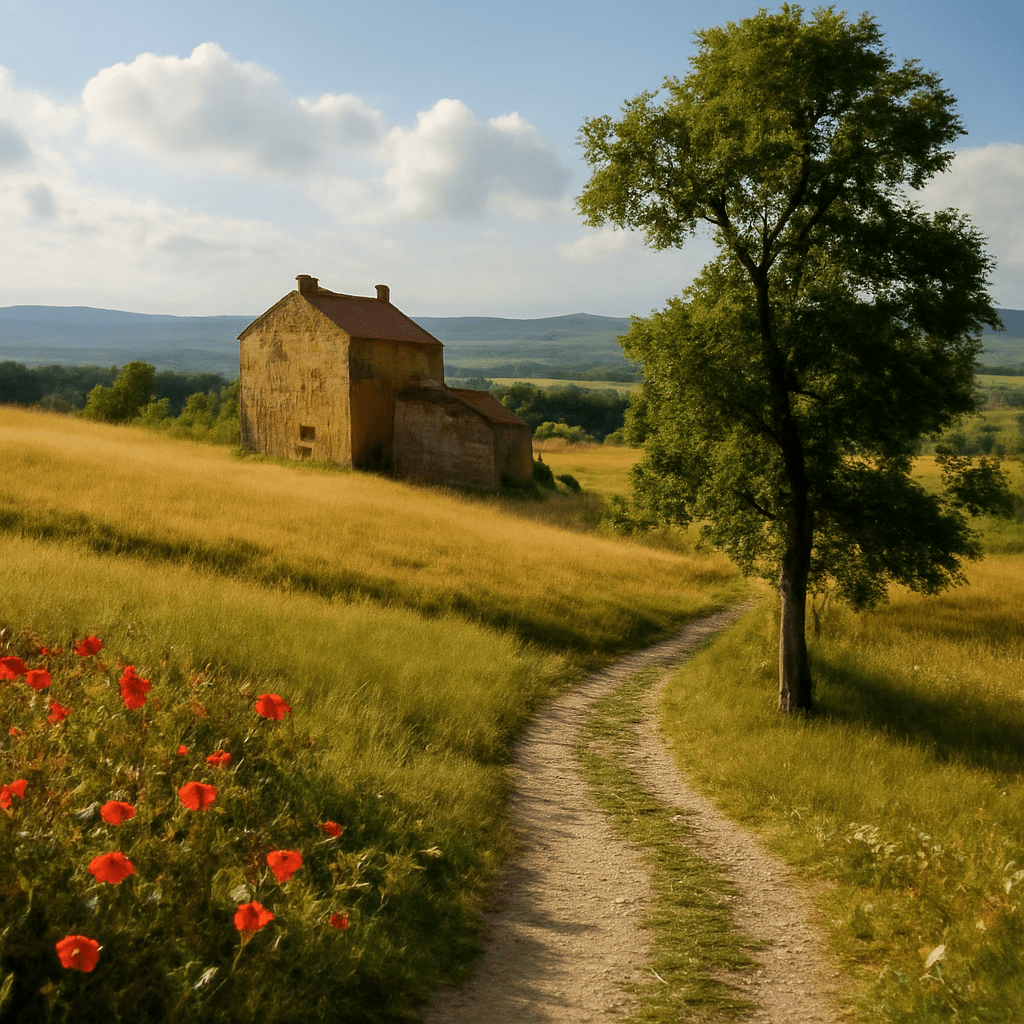
A pale ridge, a strip of trees, and a sunlit field can look deceptively simple on a blank sheet. A painting of a landscape in watercolor becomes much easier to manage when those shapes are planned as a sequence of light, middle, and dark values before the first wash goes down.
This watercolor scene begins with a reserved patch of white paper and develops through transparent layers. The example below uses a distant hill, a tree line, and a foreground path; the same decisions can organize a coastal view or a city park.
Watercolor Landscape Painting: Set up a simple study
Use a small sheet of watercolor paper, about 8 by 10 inches, a pencil, a large round brush, a smaller pointed brush, water, and a cloth. Blue, yellow, and a warm brown are enough to mix a range of greens and muted grays. Keep a scrap of the same paper nearby to test mixtures and the wetness of the brush.
For this landscape watercolor, make a thumbnail sketch in three values. Leave the sky and a bend in the path light, give the hill and field a middle value, and reserve the darkest value for a few trees near the path. The thumbnail is a map for the washes; it also shows whether the light path will lead the eye through the scene.
Draw the main divisions lightly on the larger sheet. Place the horizon above or below the center, mark the hill as one broad shape, and suggest the path narrowing toward the tree line. Avoid outlining individual leaves: they can be implied later by a few broken marks.
Lay in the light
Mix a watery blue for the sky and a dilute yellow-green for the field. Wet the sky area evenly with clean water, leaving the path and any small sunlit shapes untouched. The paper should shine without puddles; lift excess water with a rinsed, damp brush.
Sweep blue across the upper sky and let it fade toward the horizon by adding clean water to the brush. While the surface is still damp, a touch of warm gray can suggest a cloud shadow. Pigment spreads on wet paper, so leave room for it to move. Allow this first stage of the watercolor landscape painting to dry fully before placing the hill over it.
The white paper supplies the brightest lights in this landscape painting in watercolor. If a reserved shape seems too stark after the surrounding washes dry, soften its edge with a clean damp brush and a light touch. Test the mixture on scrap first: a pale wash can dry lighter than it appears in the palette.
Build the middle distance
Mix blue and brown into a subdued gray-blue, adding plenty of water. On dry paper, paint the hill as one connected shape, following the pencil line across the sky. While the wash remains damp, soften a short section at its base with a clean, damp brush to suggest haze. A distinct upper contour and a softer lower edge give the ridge both form and atmosphere.
Once the hill is dry, mix a slightly stronger green for the tree line. Paint an uneven band across its base, varying the height of the canopy and leaving a few small gaps. In watercolor paintings, landscape depth often comes from these changes in value and edge: the hill stays pale and quiet while the nearer trees carry more contrast.
A painting of a landscape with watercolor gains cohesion when colors recur. Add a little of the sky blue to the green trees, then use a lighter version of that green across the field. Let the field wash run around the reserved path, widening the path toward the bottom of the page. A narrow stroke of darker green beside one edge can suggest a shallow bank.
Bring the foreground into focus
When the field has dried, mix a darker green-brown and use the pointed brush for a small group of trees beside the path. Join several trunks to the shadow beneath them, then break the outer edge into a few irregular shapes. The darkest marks belong near the point of interest; a continuous dark outline around every tree would flatten the group.
For the foreground of the watercolor landscape, drag a relatively dry brush over the paper texture to suggest grasses. Vary the direction and length of the marks, leaving generous quiet areas between them. A few crisp blades near the lower edge can make the softer distant hill feel farther away.
This landscape painting in watercolor can now be judged at arm’s length. The eye should travel from the light path toward the trees and then up to the ridge. Squint: if the hill, trees, and field merge into a single middle tone, let the sheet dry and deepen a few tree shadows with a transparent glaze. If every edge looks equally sharp, soften one or two edges with a damp brush, testing first on scrap; preserve the clearest edges beside the path.