Exploring the Parthenon in Athens: History and Architecture
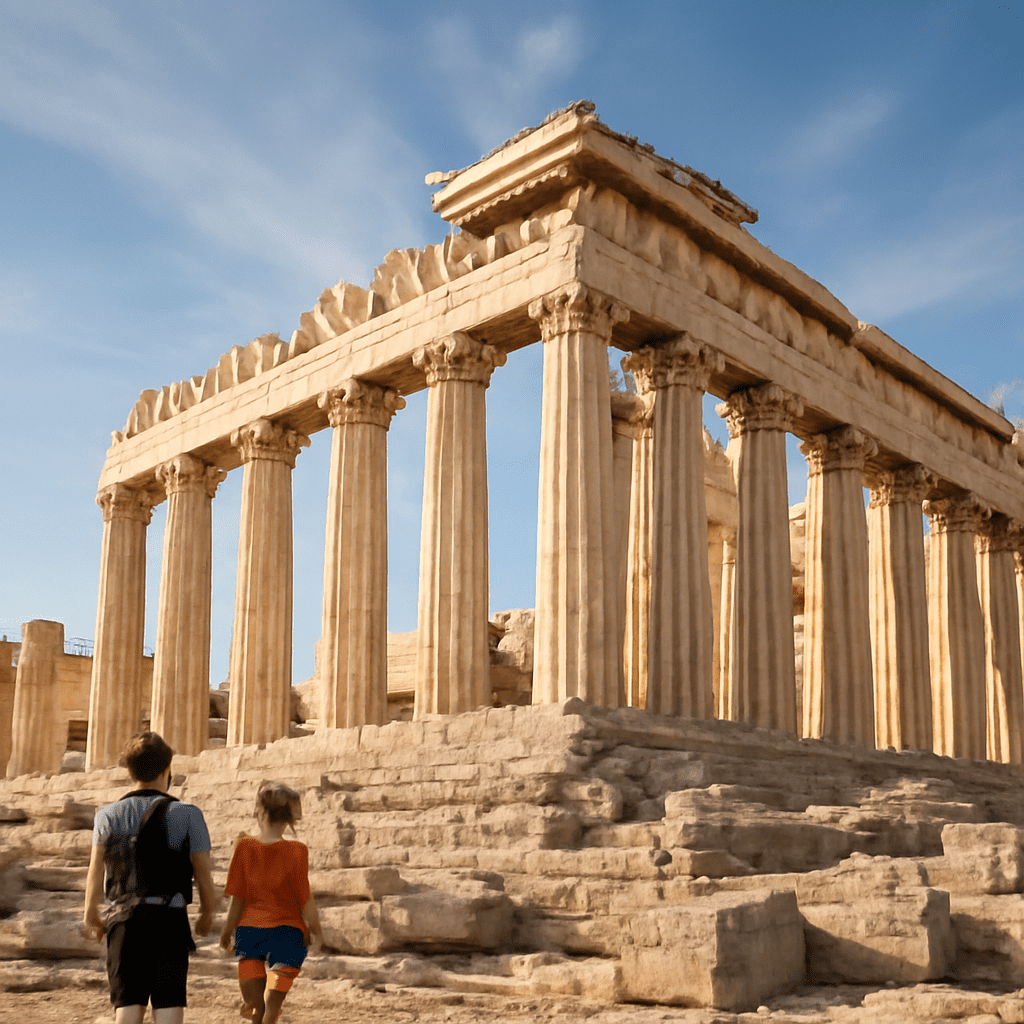
The Parthenon in Athens stands as a symbol of ancient Greece’s architectural and cultural achievement. Located on the Acropolis, this iconic structure draws millions of visitors each year, eager to explore its rich history and monumental design. Built in the 5th century BC, the temple has endured as a testament to the ingenuity of its creators and the civilization it represents.
The History of the Parthenon
The Parthenon was constructed between 447 and 438 BC during the height of the Athenian Empire. It was commissioned by the statesman Pericles, who sought to create a lasting symbol of Athens’ power and culture. The temple was built on the Acropolis, a site that had been used for religious purposes for centuries. The Parthenon served as a temple dedicated to Athena, the goddess of wisdom and war, who was also considered the patron deity of Athens. Over the centuries, the Parthenon has undergone various transformations, serving as a Christian church and later a mosque under Ottoman rule.
Who Built the Parthenon?
The construction of the Parthenon was led by two renowned architects, Iktinos and Kallikrates. Phidias, a celebrated sculptor of the time, oversaw the artistic elements and the design of the colossal statue of Athena that once resided within the temple. The collaboration of these gifted individuals resulted in a structure that harmonized architectural precision with artistic excellence, showcasing the skills and creativity of the ancient Greeks.
The Original Design and Structure
The original Parthenon was a Doric temple, characterized by simple, geometric lines and a sturdy appearance. It measured approximately 69.5 meters in length and 30.9 meters in width, with 46 outer columns and 23 inner columns supporting the structure. The columns were slightly curved, a subtle optical illusion that corrected visual distortions when viewed from afar. This attention to detail highlights the Greeks’ advanced understanding of optical principles.
The interior of the Parthenon housed the statue of Athena, crafted by Phidias from gold and ivory. The cella, or inner chamber, was adorned with intricate sculptures and friezes depicting scenes from Greek mythology and Athenian life. One of the most famous features is the Parthenon frieze, a high-relief sculpture that runs around the outer wall of the cella, illustrating the Panathenaic procession, a festival held in honor of Athena.
Architectural Significance of the Parthenon Temple
The Parthenon temple is not only a masterpiece of Greek architecture but also a symbol of the cultural and political zenith of Athens. Its architectural significance lies in its embodiment of the Doric order, which influenced countless structures throughout the ancient world and even into the modern era. The precise mathematical proportions and the implementation of entasis—the slight curve in the columns—demonstrate the Greeks’ sophisticated understanding of aesthetics and structure.
Moreover, the Parthenon’s decorative elements, such as the metopes and pediments, exhibit the high level of skill and artistry achieved by Greek sculptors. These artworks provide invaluable insight into the religious beliefs, myths, and everyday life of the ancient Greeks. The Parthenon’s enduring legacy continues to inspire architects and artists, symbolizing the timeless beauty and ingenuity of classical civilization.