Lithograph Definition: How an Image Moves From Stone to Paper
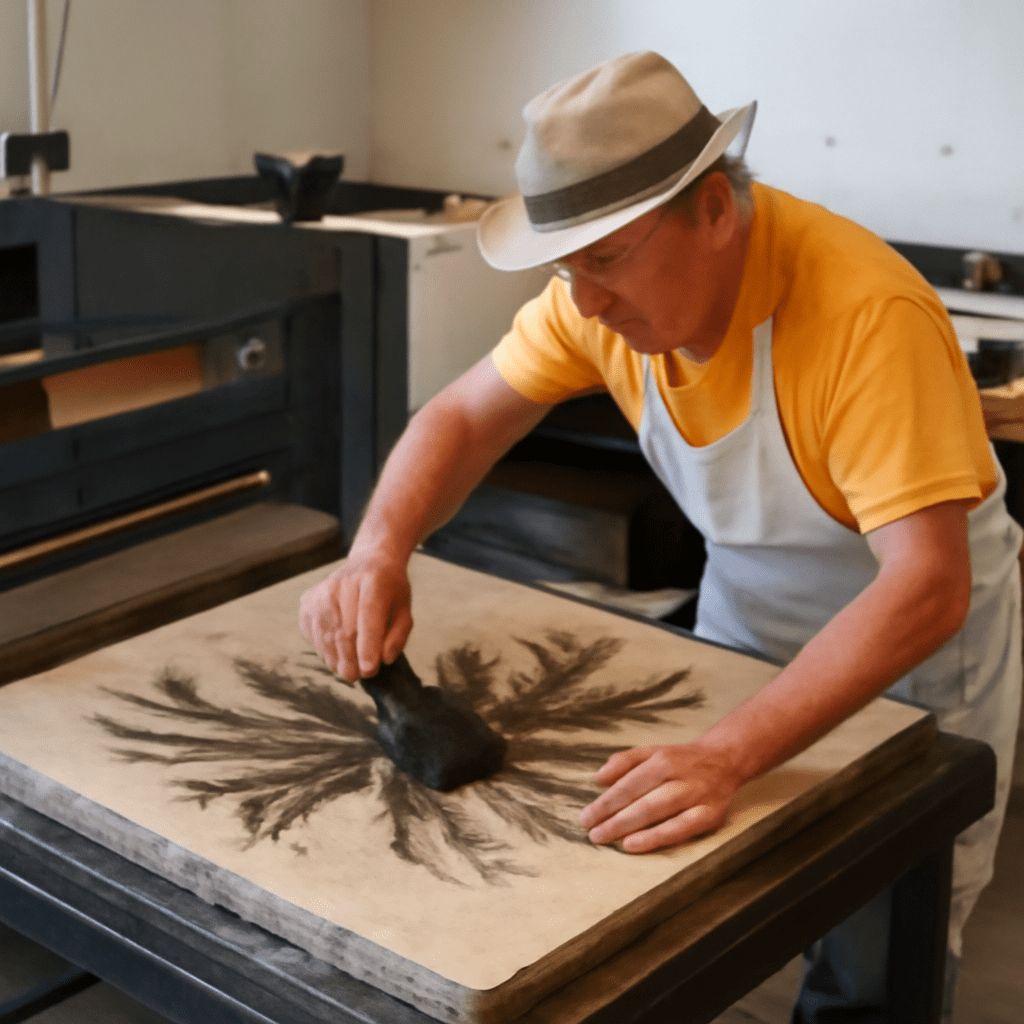
A gallery label calls a work a lithograph, but the image looks as spontaneous as a pencil drawing. What is a lithograph, and how can the same image appear on several sheets? The answer begins with a printing surface and the different ways water and greasy ink behave on it.
What’s a Lithograph and How Is It Made?
A lithograph is an impression made using lithography, a printmaking process that transfers an image from a prepared flat surface to paper. In traditional stone lithography, the artist draws on limestone with a greasy crayon or a liquid called tusche. A printer then treats the surface, applies ink, and runs it through a press with a sheet of paper.
That lithograph definition identifies both the process and its result: the printed sheet is an impression, and the prepared stone or plate is the surface from which it was printed. The artist may work with a specialist printer, particularly when preparing and printing a complex edition. The Metropolitan Museum of Art’s demonstration shows the sequence from drawing to impression.
Unlike a woodcut, in which raised areas carry ink, the lithographic image is formed on a generally flat surface. Chemical preparation makes the image areas receptive to greasy ink, while the surrounding areas hold water during printing. The subtle difference between those areas directs where ink will reach the paper.
From Drawing to the First Impression
The artist begins by making marks on a prepared stone or metal plate. A crayon can produce grainy lines; tusche can be brushed or washed across an area. Because the marks become the basis of the printed image, the surface preserves much of the character of drawing, including changes in pressure and tone.
The printer processes the completed image with materials that help establish the different printing and nonprinting areas. During printing, the surface is dampened. Water occupies the areas meant to remain blank, while an inked roller deposits oily ink on the image. A sheet of paper is placed against the surface and passed through a press.
The sheet lifted from the press is one impression. In direct stone printing, the image appears reversed from its orientation on the stone, as The Met explains. The printer can dampen and ink the surface again to produce further impressions, adjusting pressure and ink as needed. Their shared image comes from the same prepared matrix, though individual sheets can show small variations.
For lithograph art, the surface is not just a device for duplication: its texture and the artist’s marks shape the final image. A dark crayon line, a soft wash, and untouched paper can remain visibly distinct after printing.
How Color Enters the Image
A color lithograph can be built by printing separate layers of ink, commonly using a different stone or plate for each color. The printer places the sheet carefully for each pass so the layers align, a process called registration. One color might establish a broad pale ground; another might add a dark contour or a bright accent. Overlaps can also create new colors.
The order of printing affects what the viewer sees. A translucent layer can allow an earlier color to show through, while a stronger one may cover more of it. Before an edition is printed, trial impressions help the artist and printer assess color and alignment. A multicolor lithographic print is therefore the result of a sequence of choices, not simply one image pressed onto paper in a single operation.
Original Print or Reproduction?
An original lithographic print is conceived for the printmaking process, with the artist involved in creating the image for the printing surface. The resulting impressions can be multiple original works rather than copies of a preexisting painting. An artist may collaborate with a printer, and the documentation should describe their respective roles.
A reproduction, by contrast, reproduces an existing image, such as a painting or photograph. Commercial offset lithography can be used to reproduce artwork, but offset is a printing method, not by itself a guarantee that a sheet is either an original artwork or a reproduction. Artists can also use offset processes creatively. The useful question is how this particular image was made and what role the artist played.
For a work described as a lithograph, ask for the title, artist, medium, publisher or workshop, date, and edition information if available. An edition number or signature can be part of that record, but neither alone establishes authenticity. Museum catalog entries, publisher records, and a qualified specialist’s examination can add context when the history of a specific sheet matters.
Stone, Plates, and a Changing Medium
Lithography was developed by Aloys Senefelder in the late eighteenth century. It served practical printing needs and became an artistic medium for drawings, illustrations, and posters. MoMA’s overview describes limestone alongside lighter aluminum plates and identifies later forms including offset and photo-based lithography.
Those variations broaden the meaning of a lithograph without changing the central question: how was the image prepared and transferred? Some works involve direct drawing on a stone, while others use transfers or photographic means to prepare a plate. What’s a lithograph if its matrix is metal? It is an impression printed from a prepared plate instead of stone.
Is a Lithograph Always Handmade?
No. A lithograph may involve direct hand-drawing and hand-printing, but lithographic methods also include mechanical and photographic processes. A clear lithograph definition describes the printing method; the work’s documentation explains the materials, artist’s involvement, and production of that particular impression.