Chinese Porcelain: Materials, Kilns, and Visual Traditions
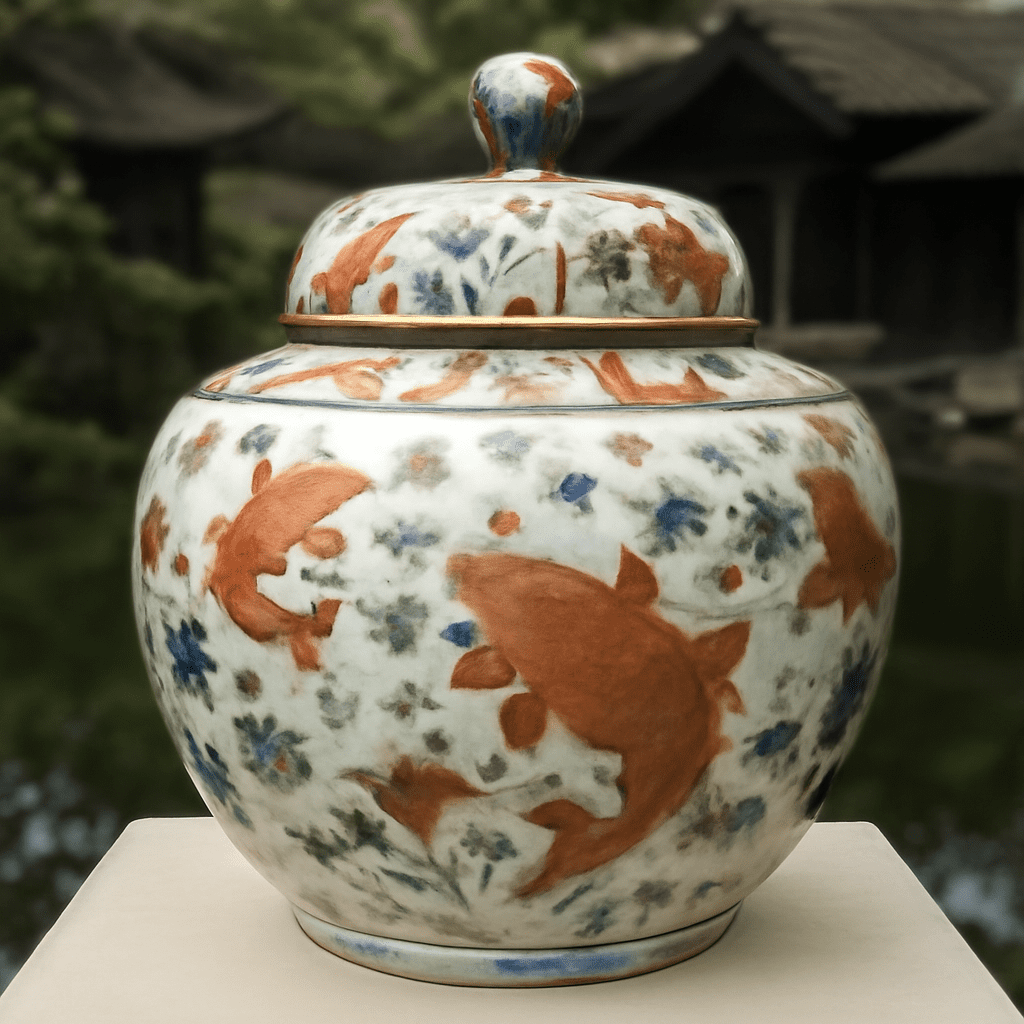
Chinese porcelain is one part of a much larger history of Chinese ceramics. The wider category includes clay objects hardened by heat, from porous cooking pots to dense vessels with glassy surfaces. Porcelain is a particular type of ceramic body, not a synonym for every fine, white, or decorated object made in China.
The most useful way to follow this history is to connect material to process: clay body, glaze, firing atmosphere, kiln region, vessel form, and decoration. Those factors explain why a celadon bowl, a Cizhou jar, and a blue-and-white dish belong to related but different traditions.
Ceramic, Pottery, and Porcelain Are Not Identical
These terms overlap in ordinary speech, but they describe different scopes. Ceramic is the broad material category; pottery often means a ceramic vessel, especially one made from clay, although usage varies. In everyday trade language, china ceramics may mean tableware, but it does not specify composition or date.
Earthenware is generally fired at lower temperatures, often below about 1,100°C. Its body remains relatively porous unless covered by glaze, and it may be red, buff, gray, or pale. Stoneware is fired hotter, commonly around 1,100–1,300°C, producing a denser, more vitrified body that can be heavily glazed or left bare.
Porcelain is usually made from a refined, kaolin-rich body with feldspathic material and fired hot enough to become highly vitrified. Thin sections may transmit light, and the body is often white or near-white, but translucency and color vary. These are technical distinctions, not a ladder of quality: an earthenware figure, a stoneware storage jar, and a porcelain cup were made for different purposes and can each be technically accomplished.
Chinese Ceramics: Early Earthenware, Stoneware, and Regional Kilns
Early Chinese potters made hand-built and wheel-thrown earthenware vessels for cooking, storage, serving, and ritual use. Neolithic painted wares, such as Yangshao vessels, use mineral pigments and geometric or animal designs, while Longshan black pottery demonstrates control of thin walls and a polished surface. Form and surface treatment already carried social and practical meaning.
During the Han period, potters developed more durable high-fired stonewares alongside brightly colored, lower-fired lead-glazed wares, expanding the range of colors and vessel types. Northern and southern kiln centers responded to local clays, fuels, and markets. Yue kilns in Zhejiang became associated with olive and blue-green celadons; later, northern Cizhou kilns used slip painting and bold brushwork on stoneware.
The Song period shows why Chinese ceramics cannot be reduced to one imperial style. Longquan produced influential celadons; Yaozhou favored carved decoration under green glaze; Ding became known for fine white wares; Jun wares used thick, opalescent blue and purple glazes; and Ru wares are noted for subtle blue-green surfaces. These kiln traditions overlapped in time and influence rather than forming a simple sequence.
Chinese Porcelain: Celadons, White Wares, and Blue-and-White Export Traditions
Celadon names a glaze family rather than a single clay body. Iron in the glaze, combined with firing atmosphere, thickness, and cooling, can produce colors from gray-green to jade-like blue-green. Carving, incising, molded relief, and controlled pooling at the foot or rim gave celadon vessels visual depth. Longquan chargers, bowls, and large storage forms show how a restrained surface can depend on precise firing.
White wares likewise cover several bodies and methods. Ding potters used pale, iron-bearing glaze and fine forms such as bowls and dishes, often with incised or molded ornament. Dehua in Fujian later became known for smooth white porcelain figures and vessels, sometimes called blanc de Chine. White does not automatically mean porcelain, and a white glaze can conceal a darker body.
Jingdezhen emerged as a leading center for high-fired porcelain production, especially from the Song and Yuan periods onward. Cobalt was painted beneath a transparent glaze to create blue-and-white decoration, with scrolling plants, dragons, landscapes, and panels adapted to bowls, dishes, jars, bottles, and ewers. Ming production refined these effects for domestic and overseas markets; Qing workshops added overglaze enamels, famille rose palettes, and complex shaped forms. Export demand encouraged new designs, but did not erase regional Chinese traditions.
Read Clay Body, Glaze, Form, Mark, and Condition in Context
A careful reading starts with the exposed clay body, usually at the foot or an unglazed break. Its color, density, inclusions, and degree of vitrification can help separate an earthenware, stoneware, or porcelain body, while glaze pooling, bubbles, crazing, and firing marks provide additional process clues. These observations are strongest when considered together, not treated as isolated tests.
Next compare form and decoration with known kiln habits. A vessel’s proportions, wall thickness, foot shape, joining method, and molded or painted motifs may indicate intended use and workshop practice. Yet forms and patterns were repeatedly copied, revived, exported, and reinterpreted. A familiar dragon, lotus scroll, or blue-and-white layout can therefore belong to more than one period.
Marks and condition add context rather than certainty. An impressed, incised, or painted mark may identify an owner, workshop, reign, or later homage, and marks were sometimes copied. Wear, staining, glaze flaws, restoration, and fresh-looking surfaces can record use or later intervention, but none proves a date alone. Visual style is a starting point for comparing body, glaze, firing, kiln region, form, and decoration; attribution requires that whole group of evidence rather than appearance alone.