Southwestern Decorating Ideas: Space, Materials, Color, and Craft
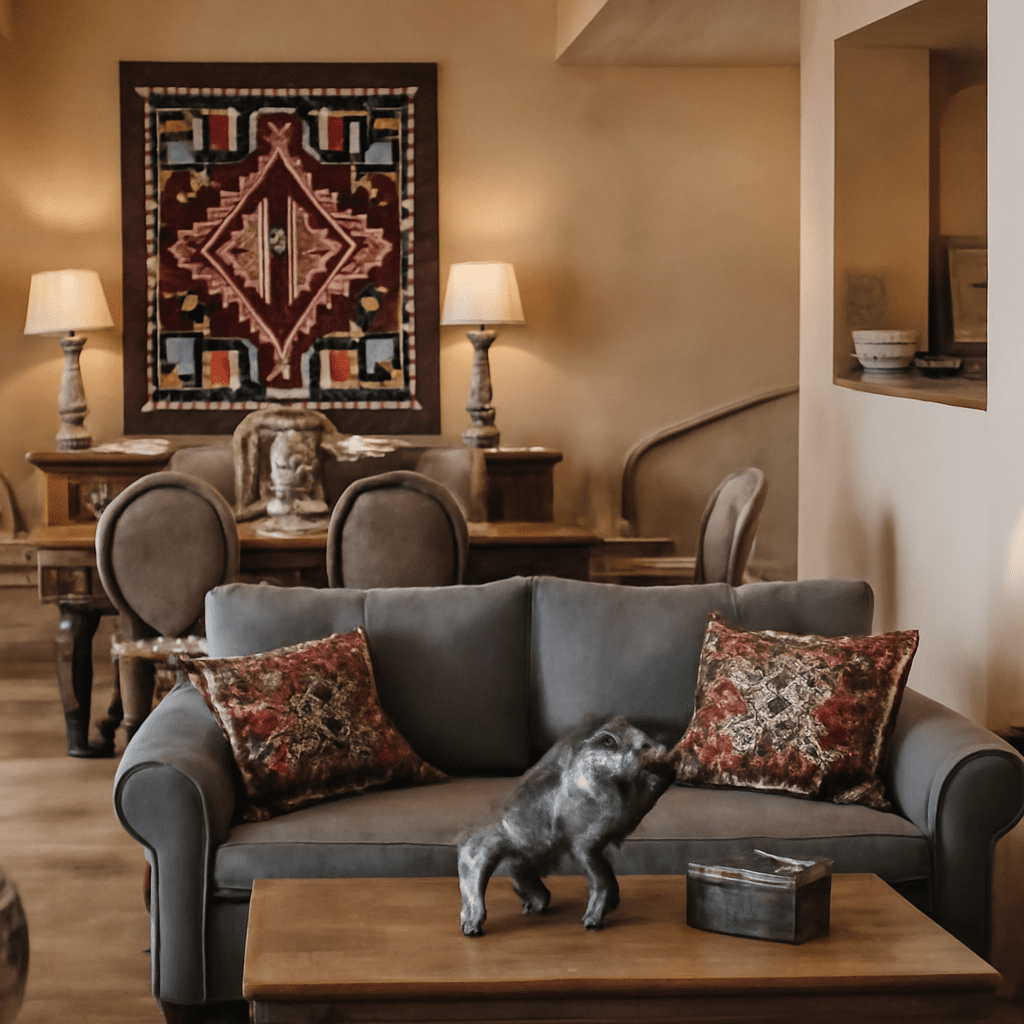
Southwestern decorating ideas work best when they begin with space, light, and material rather than a collection of desert motifs. The style can feel warm and contemporary when its earthen surfaces, shaded openings, exposed timber, and tactile textiles are balanced with simple forms.
Southwestern interior design is a regional language, not one fixed look. To adapt it successfully, first identify the room’s architectural character, then establish a restrained palette, choose substantial furniture, and finish with carefully selected textiles, art, and objects.
What Defines Southwestern Interior Design? Start with Regional Influences
Southwestern interiors reflect several overlapping but distinct traditions. Indigenous design includes the architecture, weaving, pottery, painting, and material knowledge of many nations, including Pueblo communities, Diné, Hopi, Apache, and others. These traditions are not interchangeable, and their patterns or objects should be identified by community, artist, or maker rather than grouped under a vague “tribal” label.
Spanish Colonial influence appears in adobe construction, courtyards, vigas, carved wood, plastered walls, and deeply shaded transitions between indoors and outdoors. Mexican design encompasses many regional histories and craft traditions, from tile and painted furniture to woven textiles and metalwork; it should not be treated as a synonym for Spanish Colonial style. Territorial architecture developed through later regional and Anglo-American adaptations, while ranch interiors emphasize durable, practical forms shaped by working landscapes. Modern Southwestern design simplifies these references through broad planes, large windows, quiet materials, and a strong relationship to the surrounding terrain.
These influences can share a room, but they should not be blended indiscriminately. Choose a primary direction and use the others as clearly attributed accents.
Let Thick Walls, Shaded Openings, and Exposed Timber Set the Foundation
Start with the building before choosing decor. Thick adobe or plastered walls provide thermal mass, helping interiors stay more stable through hot days and cool nights. Even where original adobe is not possible, softly finished walls can suggest the same visual weight. Earthen plaster, limewash, rounded corners, and low-sheen paint create depth without requiring ornate decoration.
Shaded openings are equally important. Deep window recesses, covered porches, wood shutters, woven screens, and substantial curtains filter intense sunlight and give a room a sense of enclosure. Use natural light as part of the design: keep windows lightly dressed where views are valuable, but control glare with layered shade rather than glossy blinds.
Exposed timber adds structure and regional character. Ceiling beams, lintels, and built-in shelving can echo traditional vigas, while reclaimed or simply finished wood keeps the effect current. In a newer home, one strong timber element is often more convincing than several decorative imitations.
Build Texture with Plaster, Clay, Leather, and Wool, Then Set a Desert-Informed Palette
Texture carries much of the style’s atmosphere. Pair matte plaster with irregular clay, the grain of timber, worn leather, hand-thrown pottery, and nubby wool. These materials work because they respond to light differently: plaster absorbs glare, clay introduces earthy variation, leather deepens with use, and wool softens hard architectural surfaces.
Choose finishes with visible but controlled variation. A handmade clay pendant, terracotta vessel, or tiled hearth can provide character; too many rustic finishes can make the room feel staged. Look for honest construction and useful forms rather than distressing applied for effect.
Build the palette from the local landscape. Begin with warm white, sand, bone, mushroom, or pale adobe. Add one or two deeper earth tones such as rust, ochre, cinnamon, or mesquite brown. Muted sage, juniper, dusty blue, or mineral turquoise can provide contrast, but saturated color is most effective in small, deliberate areas. Repeat a color in at least two materials so it feels integrated rather than decorative.
Southwest Decor Ideas: Choose Substantial Furniture, Then Layer Textiles, Pattern, Art, and Objects
Use this sequence to build a coherent room:
- Assess the architectural background. Note the wall finish, ceiling height, timber, window depth, flooring, and direction of natural light. Let those existing conditions determine how much visual weight the room can hold.
- Set a restrained palette. Select a dominant neutral, one earth tone, and one muted accent before shopping or specifying fabrics. This prevents separate pieces from competing.
- Choose substantial furniture forms. A low, deep sofa, a solid wood table, a leather lounge chair, or a built-in bench can anchor the room. Favor broad silhouettes, visible joinery, and comfortable proportions over spindly occasional furniture.
- Layer textiles and pattern with purpose. Add a wool rug, woven throw, linen curtains, or leather cushions to vary texture. If using a patterned textile, give it space to read instead of combining several unrelated motifs.
- Finish with art and objects. Select a ceramic vessel, carved wood piece, landscape painting, or metalwork object because it has a specific connection to the room. Identify Indigenous, Mexican, or other culturally specific work accurately and credit its maker or community.
Pattern should support the architecture, not announce a theme. A single geometric weave, striped blanket, or hand-painted tile border is usually stronger than a room filled with competing prints. Arrange objects in small groups with empty space around them so craft remains visible.
Adapt the Style Without Turning the Room into a Theme
Contemporary Southwestern rooms edit rather than accumulate. Keep the architecture calm, use a few durable natural materials, and let one or two crafted pieces provide regional emphasis. Cactus motifs, novelty signs, faux-antique advertisements, and mass-produced “tribal-style” patterns reduce a complex design history to props.
Instead, express the region through proportion, shade, texture, and restraint. In a rental, use clay vessels, a wool rug, timber furniture, and warm mineral paint. In a new build, prioritize deep window reveals, covered outdoor space, plaster-like finishes, and integrated storage. The result should feel connected to Southwestern climate and craft without pretending that every regional tradition is the same.