Baroque Church Architecture: Its Defining Characteristics
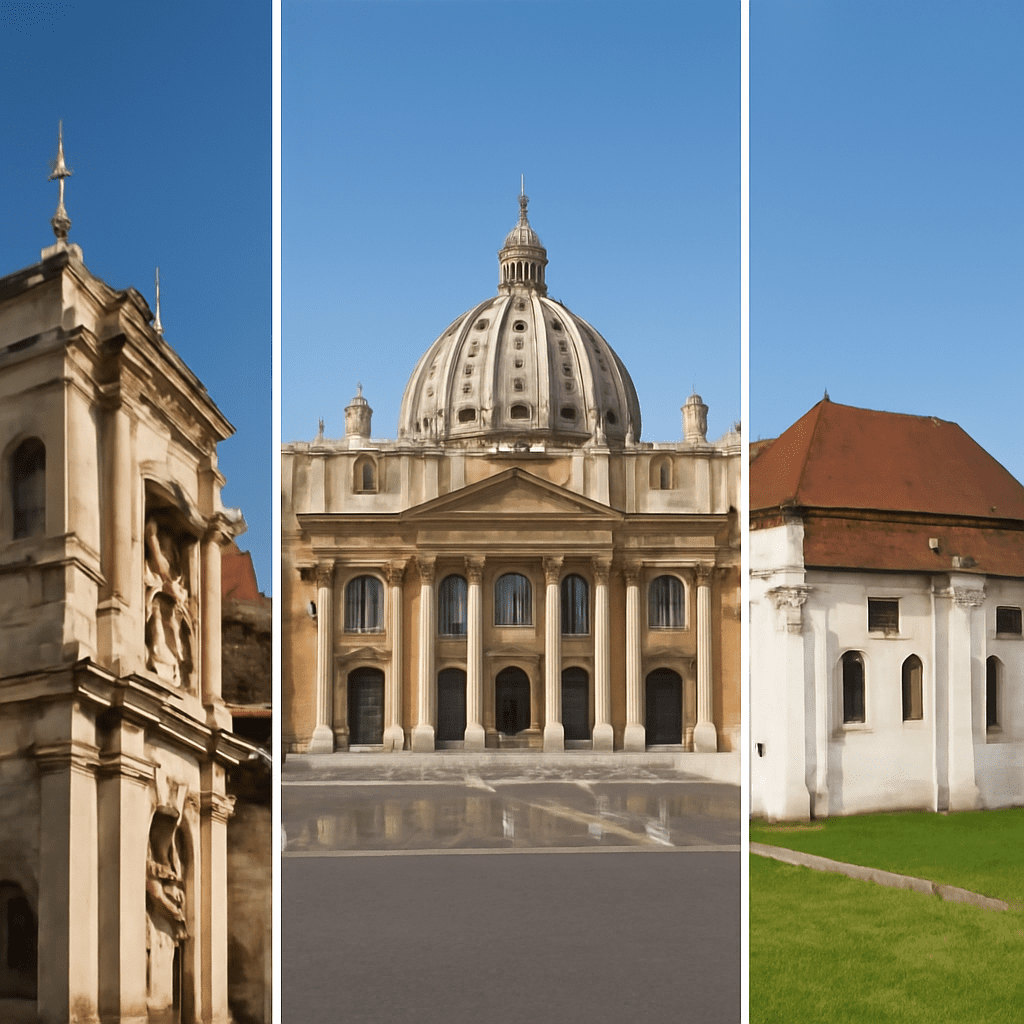
A baroque church is designed as a total visual and spatial experience. Its curved walls, layered facade, dome, directed light, painted illusion, sculpture, and costly materials work together to guide attention toward the altar and create a sense of movement. The defining features are therefore not simply lavish decoration, but the way architecture shapes worship, procession, perception, and emotion.
Developed across Europe during the seventeenth and early eighteenth centuries, baroque style architecture turned buildings into dramatic sequences. The characteristics of baroque architecture appear in churches, palaces, civic buildings, and gardens, although the church provides its clearest framework for understanding how structure and the arts were integrated.
Baroque Church Architecture in Context: Why Churches Became Key Commissions
Churches became major Baroque commissions in the period following the Reformation, when the Catholic Church sought spaces that communicated authority, doctrine, and emotional conviction. A richly staged interior could make worship more immediate: the congregation saw the altar clearly, followed processions along a strong axis, and encountered images that reinforced sacred narratives. Religious orders, confraternities, bishops, and monarchs funded ambitious projects as expressions of faith and influence.
Rome was a central laboratory, but Baroque church architecture spread widely. Il Gesù in Rome established an influential model with a broad nave, side chapels, and a visually emphatic altar. Later buildings pushed the language further. Bernini’s Sant’Andrea al Quirinale compresses a richly oval plan into an intimate, highly controlled setting, while St. Peter’s Basilica combines monumental scale, a commanding dome, and Bernini’s urban colonnade. In Austria, southern Germany, Spain, and Portugal, local materials, traditions, and patrons produced distinct variations.
How Baroque Style Architecture Creates Movement
Movement begins in the plan. Instead of relying only on the straight, stable geometry associated with many Renaissance buildings, Baroque architects used ovals, interlocking curves, diagonal views, and compressed or expanded spaces. The visitor may approach through a relatively narrow entrance, enter a swelling central volume, and then be drawn toward a brightly framed altar. This sequence makes the building feel active even when its walls are made of stone.
Facades communicate the same energy. They may project and recede in layers, using paired columns, broken pediments, deep niches, and curved bays to create changing shadows. The facade of San Carlo alle Quattro Fontane in Rome, designed by Francesco Borromini, undulates across the street rather than presenting a flat screen. Its complex geometry continues inside, where a small site produces an unusually dynamic spatial experience. At a larger urban scale, the approach to St. Peter’s demonstrates how a church, square, and colonnade can choreograph arrival and establish a powerful civic presence.
Domes, Light, and Theatrical Interiors
The dome gives many Baroque churches a vertical focus, but its importance is more than structural. It connects the congregation to an imagined heavenly realm and often gathers light above the central space. Windows hidden in drums, lanterns, or concealed openings can make the source of illumination difficult to locate. Light appears to descend onto an altar, shrine, or sculptural group, giving it a heightened presence.
Baroque interiors also use controlled contrast. A dark entrance can lead toward a luminous sanctuary; side chapels can remain subdued while a dome or painted vault opens visually above. Ceiling frescoes extend architecture through illusionistic painting, making flat surfaces appear to dissolve into skies, clouds, figures, and architectural frameworks. In the Church of Saint Ignatius in Rome, Andrea Pozzo’s ceiling creates the impression of a soaring dome where the structure is actually flat. The effect depends on viewpoint, perspective, and carefully directed attention rather than ornament alone.
The Characteristics of Baroque Architecture: Painting, Sculpture, and Material
Painting, sculpture, and architecture were planned as one composition. Altarpieces could combine columns, paintings, marble, gilding, and sculpture into a single visual focus. Statues were positioned to respond to light and to the viewer’s movement, while angels, saints, and drapery often seem to cross the boundary between the carved object and the surrounding building.
Material effects reinforce this theatrical unity. Colored marble, polished stone, bronze, stucco, gilded wood, and reflective surfaces establish hierarchy and rhythm. In Bernini’s Ecstasy of Saint Teresa in Santa Maria della Vittoria, sculpture, architecture, hidden lighting, and side viewing boxes form a staged devotional environment. In the pilgrimage church of Vierzehnheiligen in Bavaria, Balthasar Neumann uses flowing spaces, pale surfaces, frescoes, and elaborate stucco to create movement across a broad interior. These examples differ greatly, showing that Baroque richness could be intimate, monumental, restrained in color, or intensely ornate.
How to Recognize a Baroque Church Without Reducing It to Ornament
When identifying a Baroque church, read the building in sequence rather than judging its decoration first. Look for:
- A directed plan: an axial route, an emphatic altar, or a series of spaces that controls how visitors move and see.
- Dynamic geometry: oval rooms, curved walls, diagonal relationships, or alternating projections and recesses.
- A layered facade: overlapping orders, deep shadows, sculptural niches, and a strong connection between the building and the street.
- A vertical focus: a dome, lantern, vault, or painted ceiling that redirects attention upward.
- Controlled light: illumination that highlights a sacred image or altar while leaving other areas comparatively subdued.
- Integrated arts: painting, sculpture, stucco, metalwork, and marble arranged to produce one coordinated effect.
A church does not need every feature to be Baroque, and not every Baroque building is a church. The most reliable test is whether space, movement, light, and ornament cooperate to create a persuasive visual and devotional experience.