Ancient Cave Drawings: Images Made in Stone Spaces
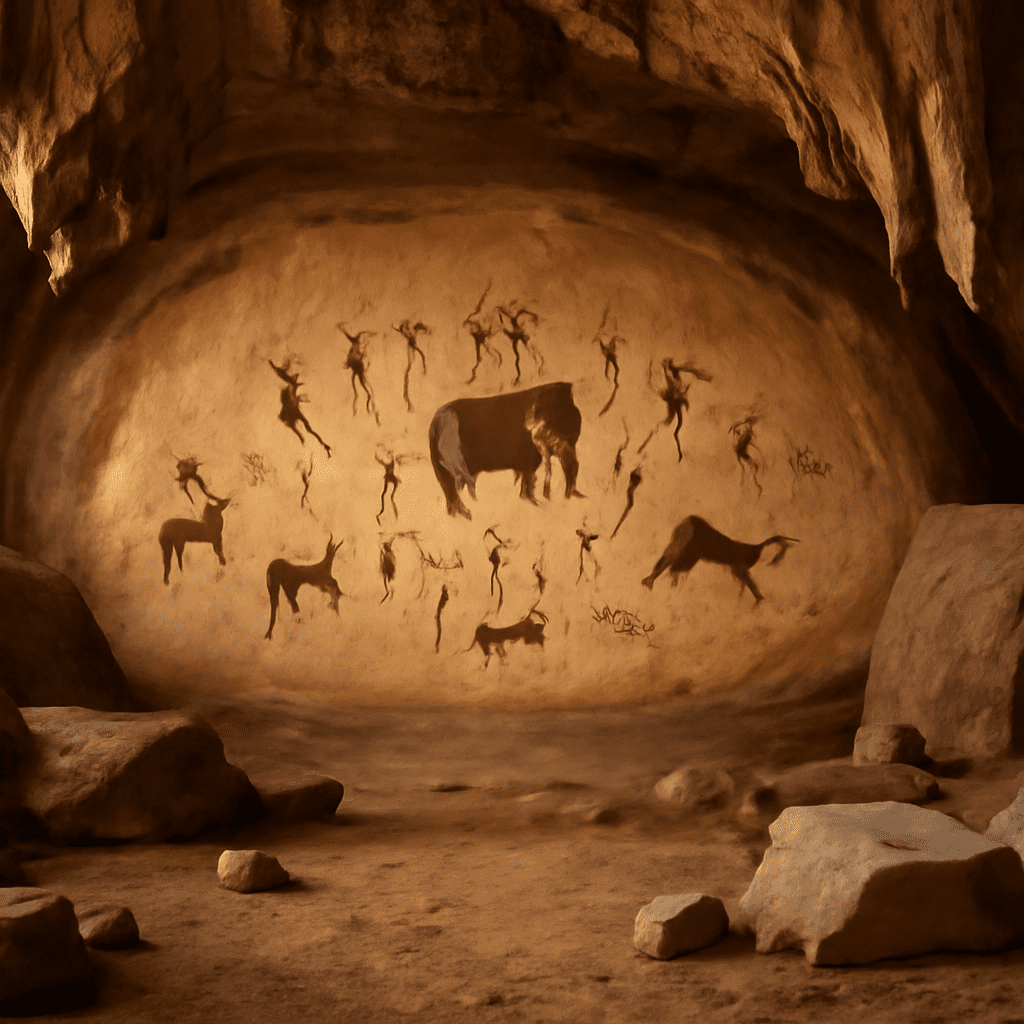
Across a cave wall, a dark animal seems to move with the contours of the rock. Ancient drawings on cave walls offer a meeting of image, material, and place: their makers used surfaces that were uneven, enclosed, and sometimes difficult to reach. The earliest paintings found in caves also raise a question that reaches beyond any single image: what evidence allows a work to be called the oldest?
The phrase ancient cave drawings covers many kinds of marks, from outlined animals to stenciled hands. Some were drawn or painted, others engraved; some overlap traces made at different times. The surviving colors and lines of these ancient images drawn in caves are only part of a longer history of making, use, weathering, and discovery.
Earliest Cave Paintings: What the Evidence Shows
In Sulawesi, Indonesia, a red scene in Leang Karampuang includes a pig and human-like figures. Researchers used laser-based uranium-series analysis on mineral deposits over the image and reported a minimum age of 51,200 years. The 2024 study in Nature interprets the group as a narrative scene. The mineral date sets a lower boundary for the painting’s age; it does not identify the day or year the figures were made.
At another Sulawesi site, Leang Tedongnge, a painted warty pig has a published minimum age of 45,500 years. Its recognizable body is important to claims about the earliest figurative paintings in caves: a figurative image depicts a subject, whereas an abstract mark may be deliberate without depicting an animal or person. The two categories answer different questions about early art.
At Lascaux in France, bulls, horses, and other animals spread across chambers and passages. Shapes drawn in dark lines meet areas of red and yellow, while changes in the rock surface contribute to the experience of looking. The French Ministry of Culture’s Lascaux resource describes dating evidence and differing interpretations of the chronology. This site is much younger than the Sulawesi examples, but its complexity shows why ancient drawings in caves are also studied as arrangements within a space.
Pigment, gesture, and the wall
How were cave paintings made? Methods varied by site and image. At Lascaux, surviving pigments include iron and manganese oxides and charcoal; hematite supplied red and goethite yellow, according to the site’s materials analysis. A dark outline and a broad field of color can therefore have different material histories, even when they form one animal.
Hand stencils demonstrate another method: pigment was blown over a hand held against the surface, leaving its outline as a negative shape. A study of prehistoric hand stencils describes this process. The placement of the hand, the direction of the spray, and the texture of the stone all shaped the result. These traces make the question of how cave paintings were made a physical one, involving bodies and surfaces as well as color.
Ancient cave drawings could also be engraved into rock. Incised lines can survive where pigment has disappeared, and a single wall may carry several techniques. Looking closely at ancient cave-wall drawings means asking which lines belong together and whether later marks cross earlier ones. These ancient drawings made in caves show how such relationships can establish a relative sequence even when no calendar date is available.
Reading a date and an image
Radiocarbon dating can measure carbon-bearing material, such as charcoal, when a suitable sample is available and its relationship to the image is established. Results require calibration and carry ranges of uncertainty. Mineral pigments themselves generally cannot be dated this way, so researchers may turn to deposits formed over or under an image. Uranium-series analysis of calcite above pigment gives a minimum age: the image must have been there before that dated layer formed. A deposit beneath it can instead provide a maximum boundary, if the layers’ relationship is secure.
That distinction matters when comparing the earliest cave paintings. Comparing the first known paintings in caves requires careful dating. A minimum age of 51,200 years is evidence that a work is at least that old, while another work’s true age might be older than its own minimum. Dating techniques, sample quality, and the position of a deposit all affect how confidently two results can be compared. New finds and refined measurements can change the order of the oldest paintings in caves.
The words used for an image matter too. A painting of a cave depicts the cave as a subject; a pig painted on a cave wall uses the cave as its surface. An artist who creates a painted view of a cave takes the interior itself as the subject. Such a portrait of the cave rendered in paint provides different evidence from the figures at Sulawesi. Claims about cave painting also differ from claims about the oldest art of any kind, which might include marks or objects made elsewhere.
Ancient drawings from caves invite attention to both the image and the evidence around it. When reading a date for a particular figure, what material was tested, and does that result date the image itself or a layer formed above it?